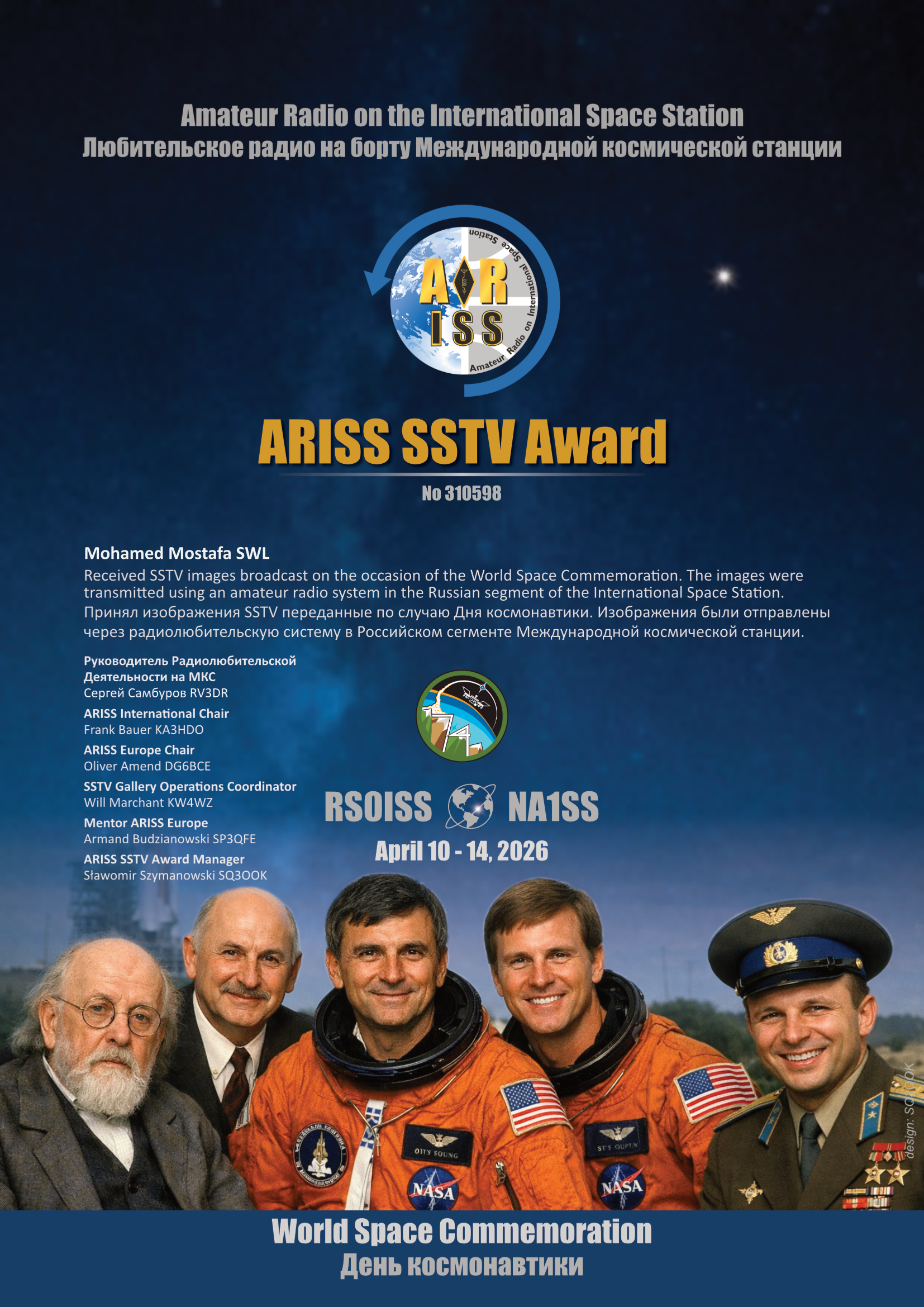
Sometimes, the universe aligns just right for some cool moments in life. This is definitely one of those times.
I have been a huge fan of Amateur Radio (HAM) ever since I watched the movie Contact in the 90s. That world map with pins for every radio contact became my goal. I tried to get into the hobby multiple times, but it just wasn’t easy or possible where I lived. Naturally, I was also a fan of SDR (Software Defined Radio); I had some fun in the past with a repurposed DVB-T dongle during the “big RTL2832U revolution.”
Fast forward to April 2026. I decided to pick up a Nooelec SDR to start experimenting again. On the very day it arrived, while I was planning my first projects, I learned that the ARISS SSTV Series 31 was taking place just two days later (April 10th–14th).
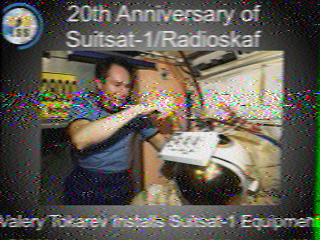
ARISS SSTV is a hobbyist event where the International Space Station transmits still images as audio tones that you can receive and decode on Earth using a simple radio or SDR dongle.
I thought, “I can’t possibly get this,” but for me, the biggest part of the fun is the “trying” part. I read everything I could to prepare, tracked the ISS orbit to find the best elevation for my location, and hoped for the best.
The window for a pass is only about 10 minutes. During that time, you might get two full transmissions, as the station transmits for 37 seconds followed by two minutes of silence. I had no way of knowing if my setup was correct: a telescopic antenna fully shortened for 437.55 MHz and attached to—you guessed it—a pizza pan ground plane.
I also had to manually adjust for the Doppler effect, which was difficult given how the bright sun made it nearly impossible to see my laptop screen while trying to follow the signal on the waterfall.
Luckily, on the first pass, I heard the signal on SDR++ and managed to decode part of it live using QSSTV on Arch Linux. I didn’t record the audio, but at least I knew I could catch the signal! That pass was low elevation (less than 30°), so I assumed the next two passes—both over 60°—would be easy.
I was wrong.
On the next pass, I couldn’t track the signal cleanly. I could only hear it faintly. To make matters worse, SDR++ hung in the middle of the pass, likely because I was frantically moving my gear around trying to find a better signal.
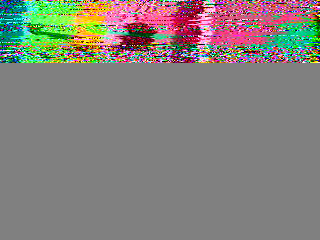
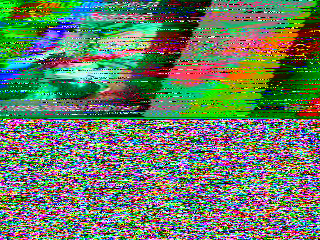

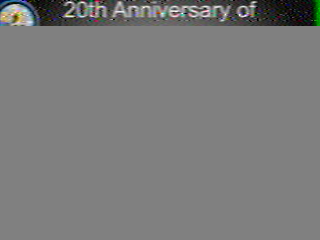
luckily, I was able to get one good signal and clean decoding to apply for the award